Case studies
Twelve real ECGs, read end to end
Each case is a public research ECG from PTB-XL, printed on A4, photographed by TraceRead's photo simulator and read by the same code that reads every photo. Each one is checked twice: against the original digital recording, and against what the dataset's cardiologists recorded. Every run we made is here, including the ones TraceRead read wrongly.
12
photos read, none held for a retake
Pages drawn by a fixed rule from the print kit, 3 from each group below.
0.88
median match between the rebuilt traces and the original recordings
0.98 after lining them up by up to a tenth of a second. 1.00 is a perfect match.
20 of 29
statements recorded by the cardiologists that TraceRead AI also flagged
Every statement found in 5 of 12 cases.
2 of 12
read wrongly
Both are shown below, with what went wrong.
3 cases
Normal ECGs
The cardiologists recorded a normal ECG.
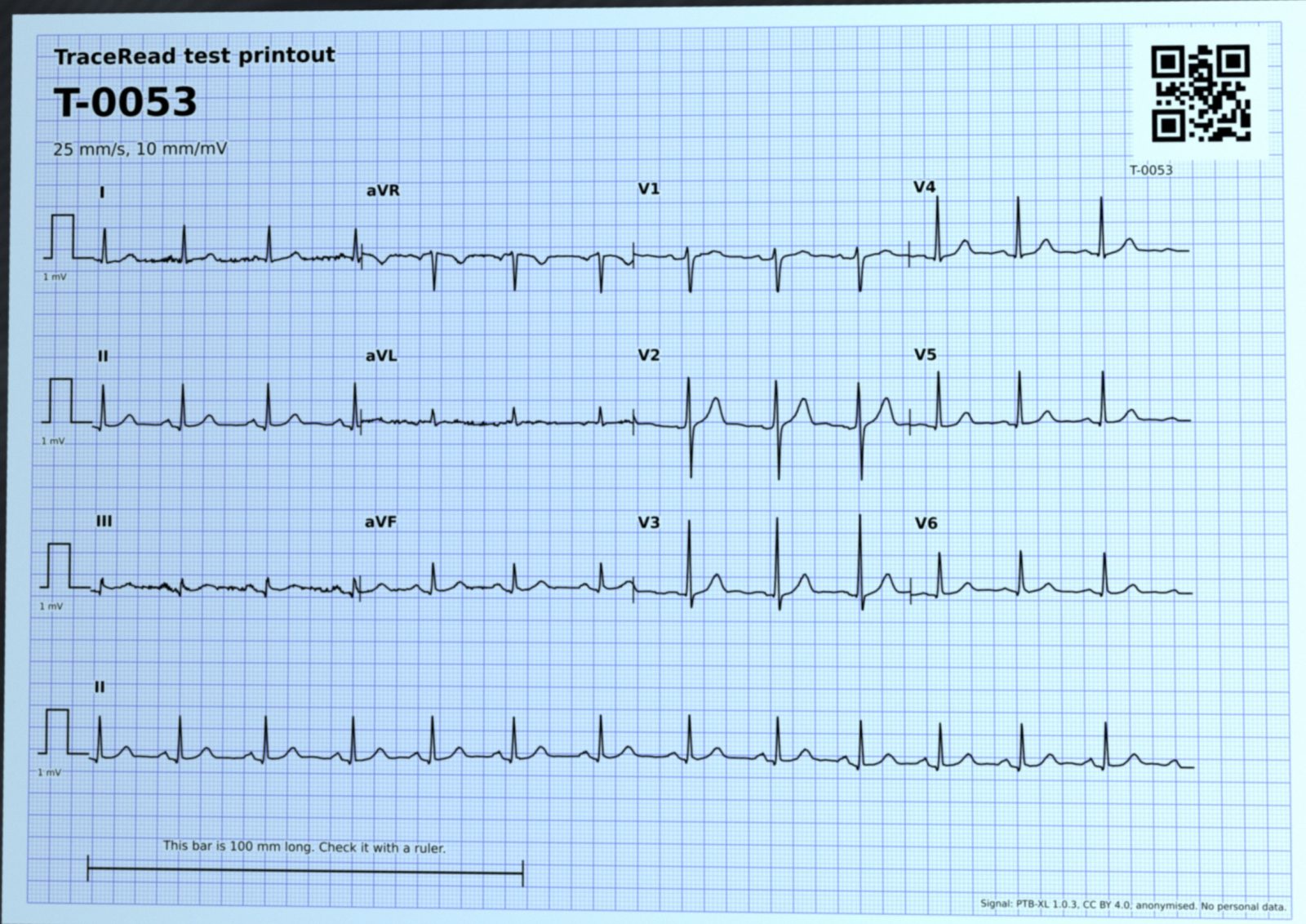
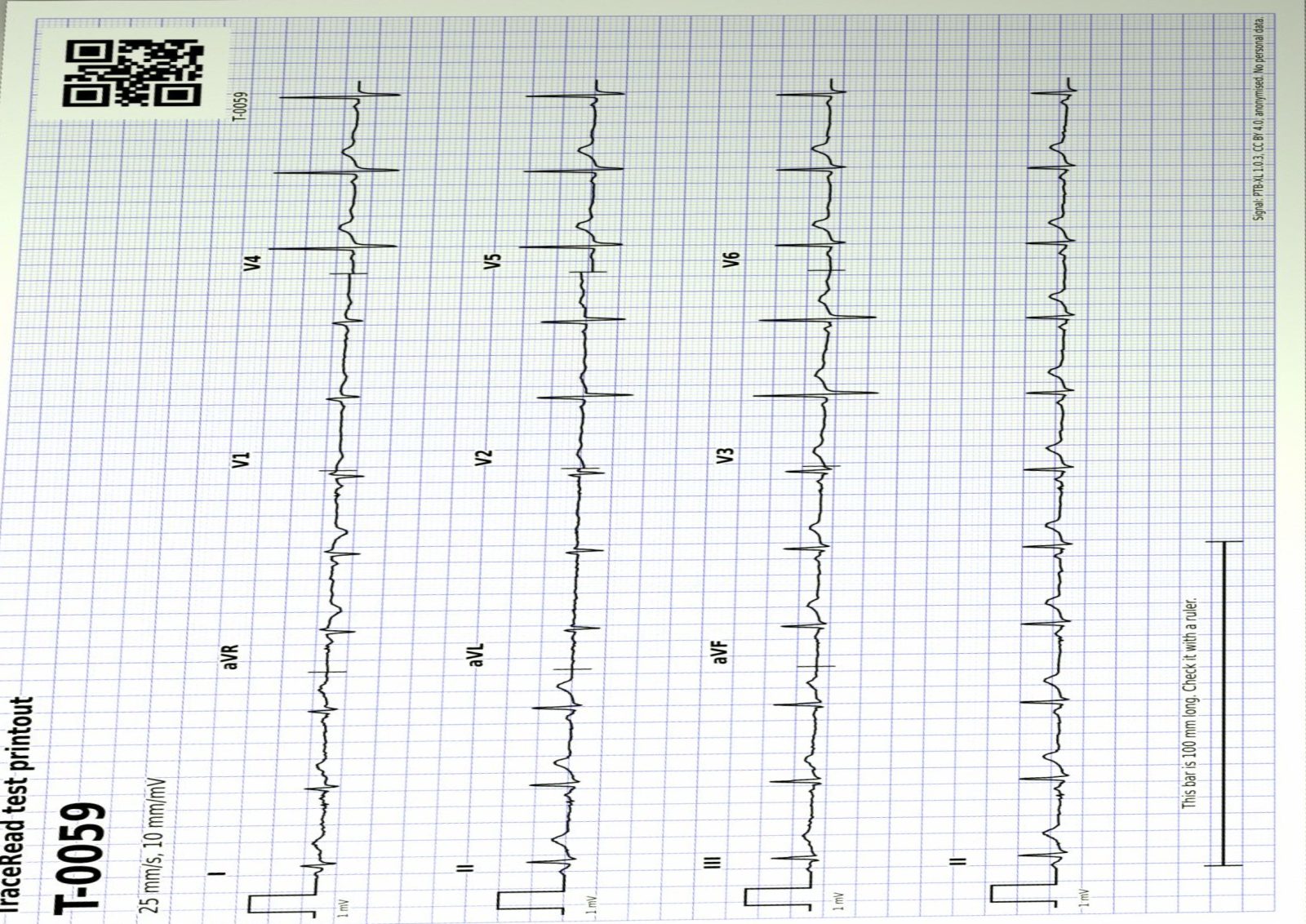
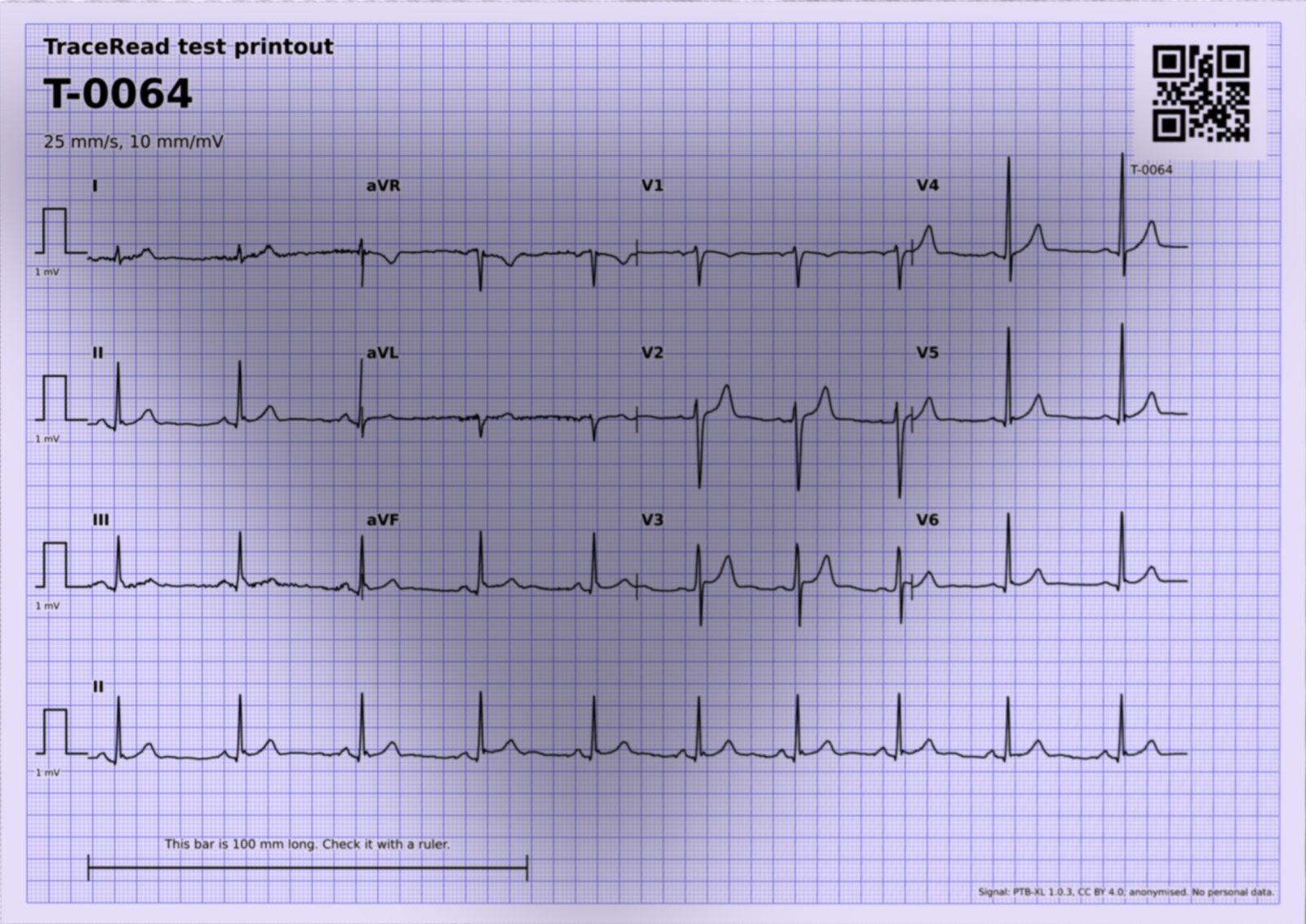
3 cases
Rhythm changes
The cardiologists recorded a rhythm other than the usual sinus rhythm.
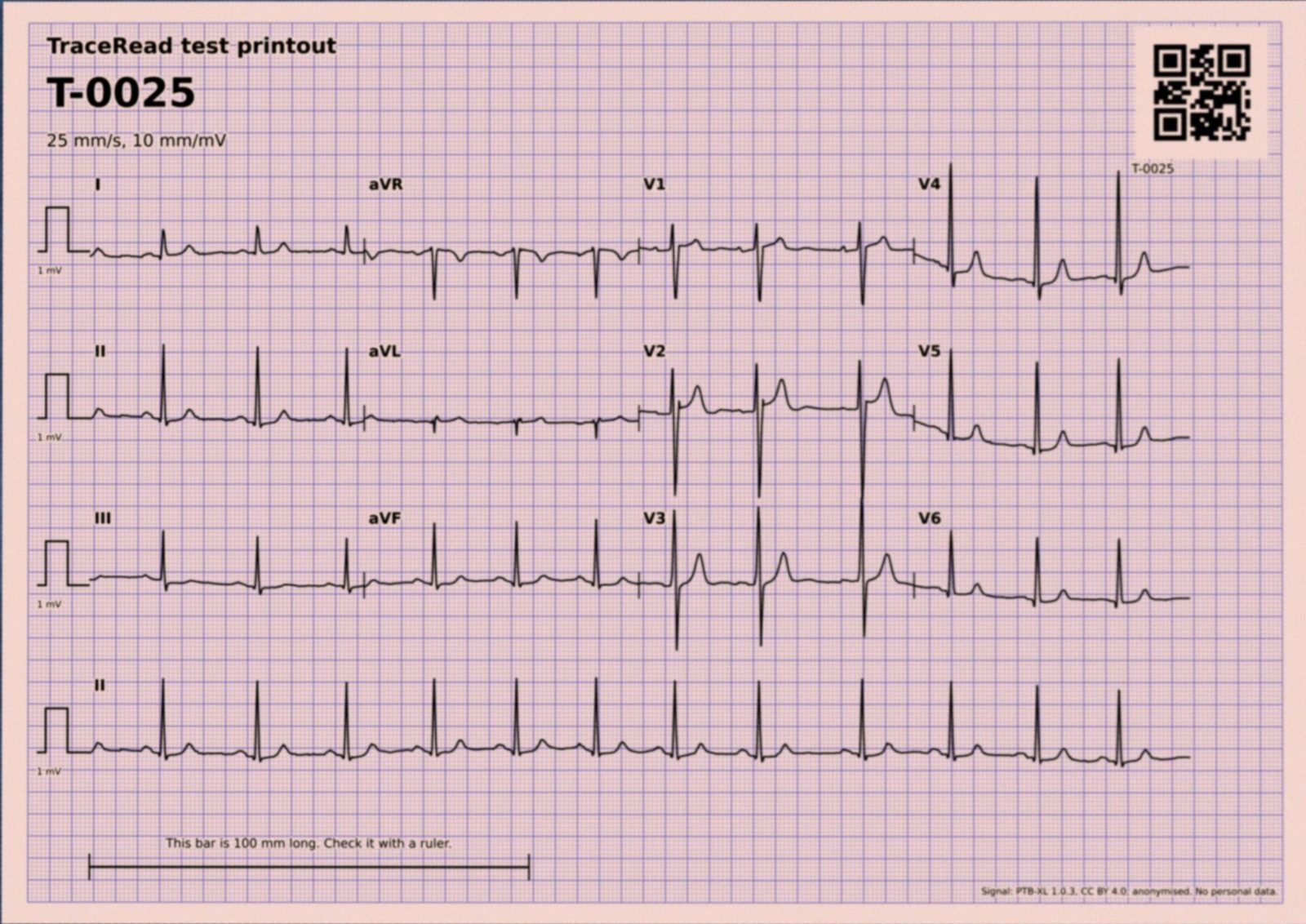
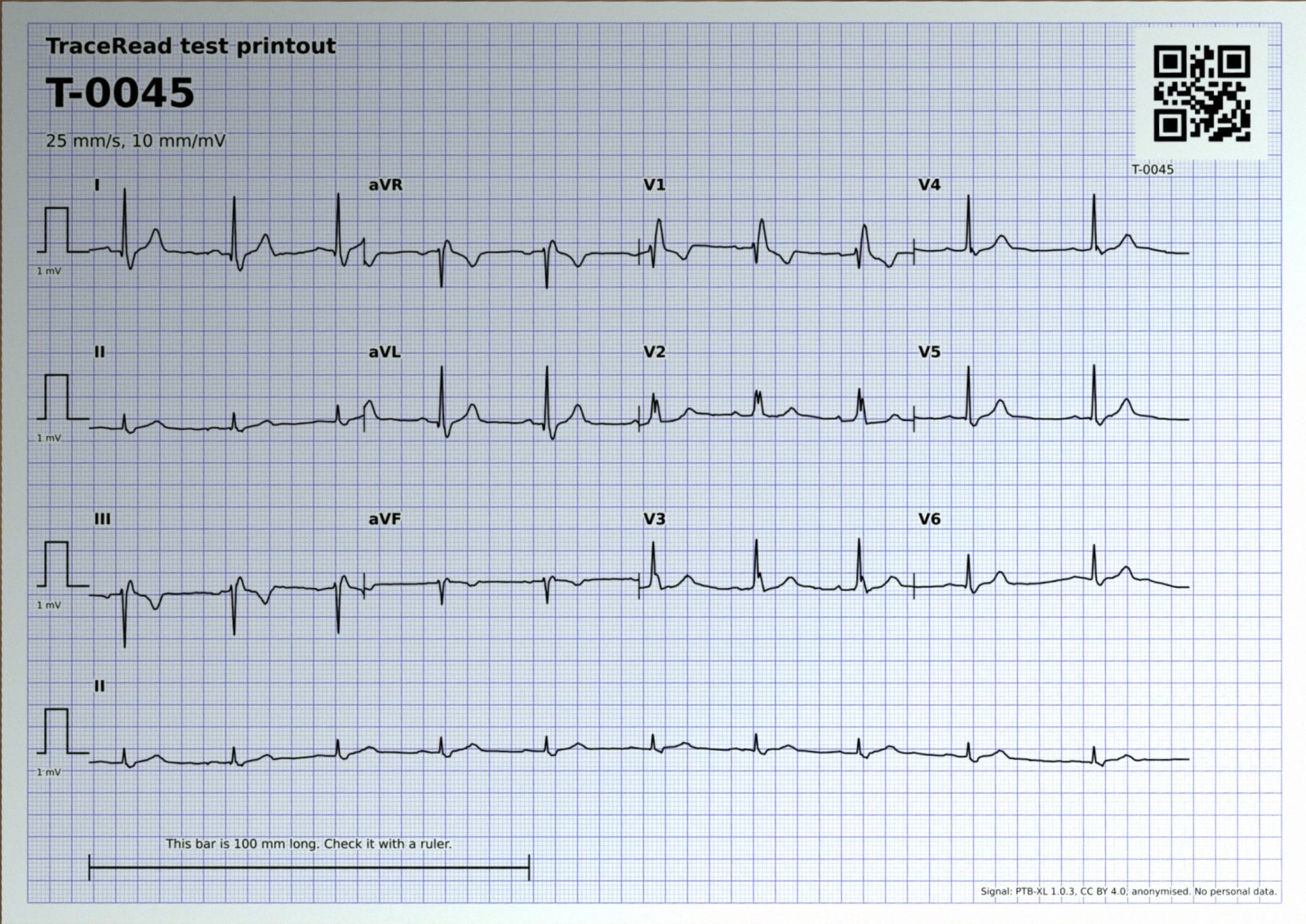
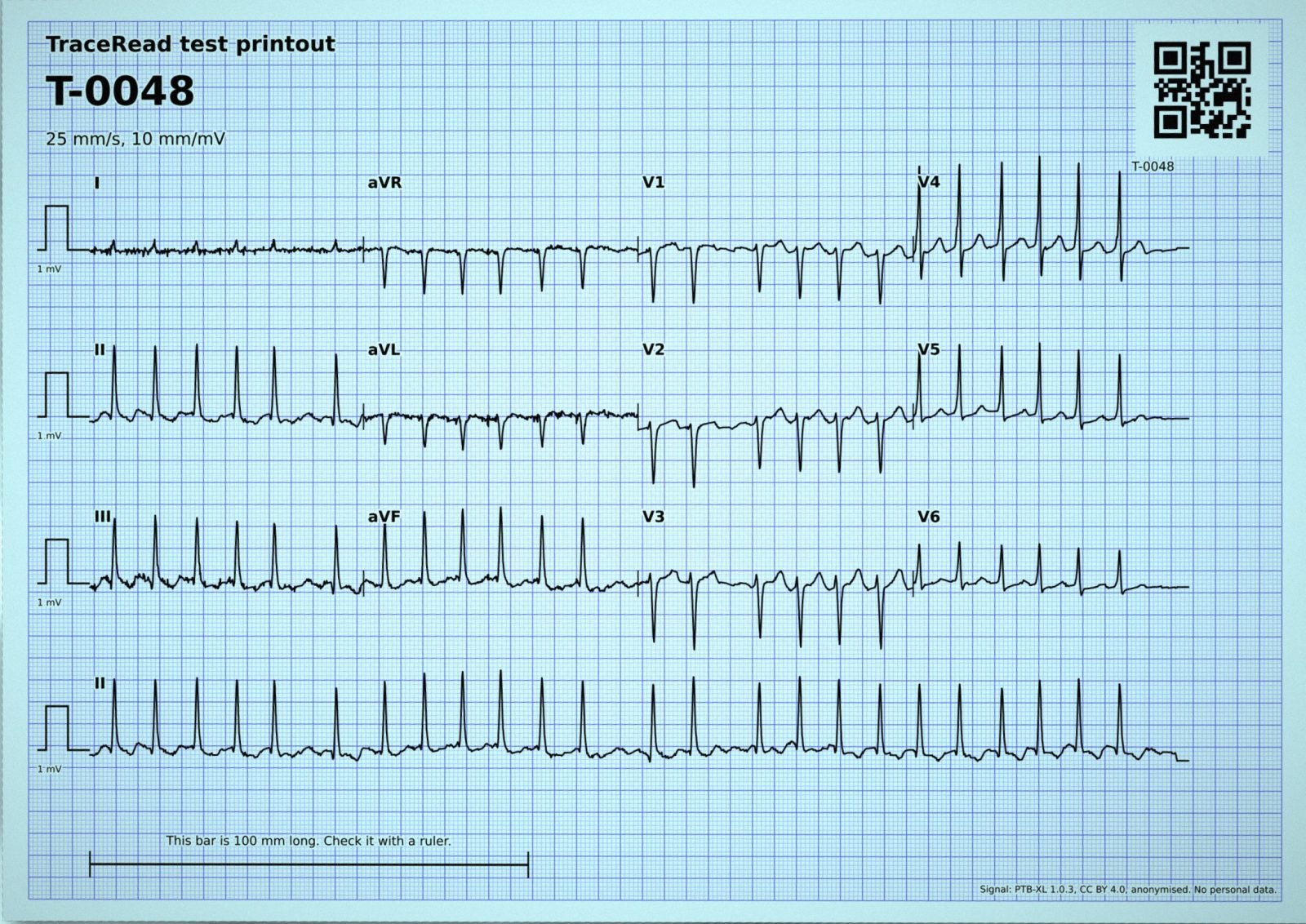
3 cases
Conduction changes and thickened muscle
The cardiologists recorded a slowed signal or a thickened heart wall.
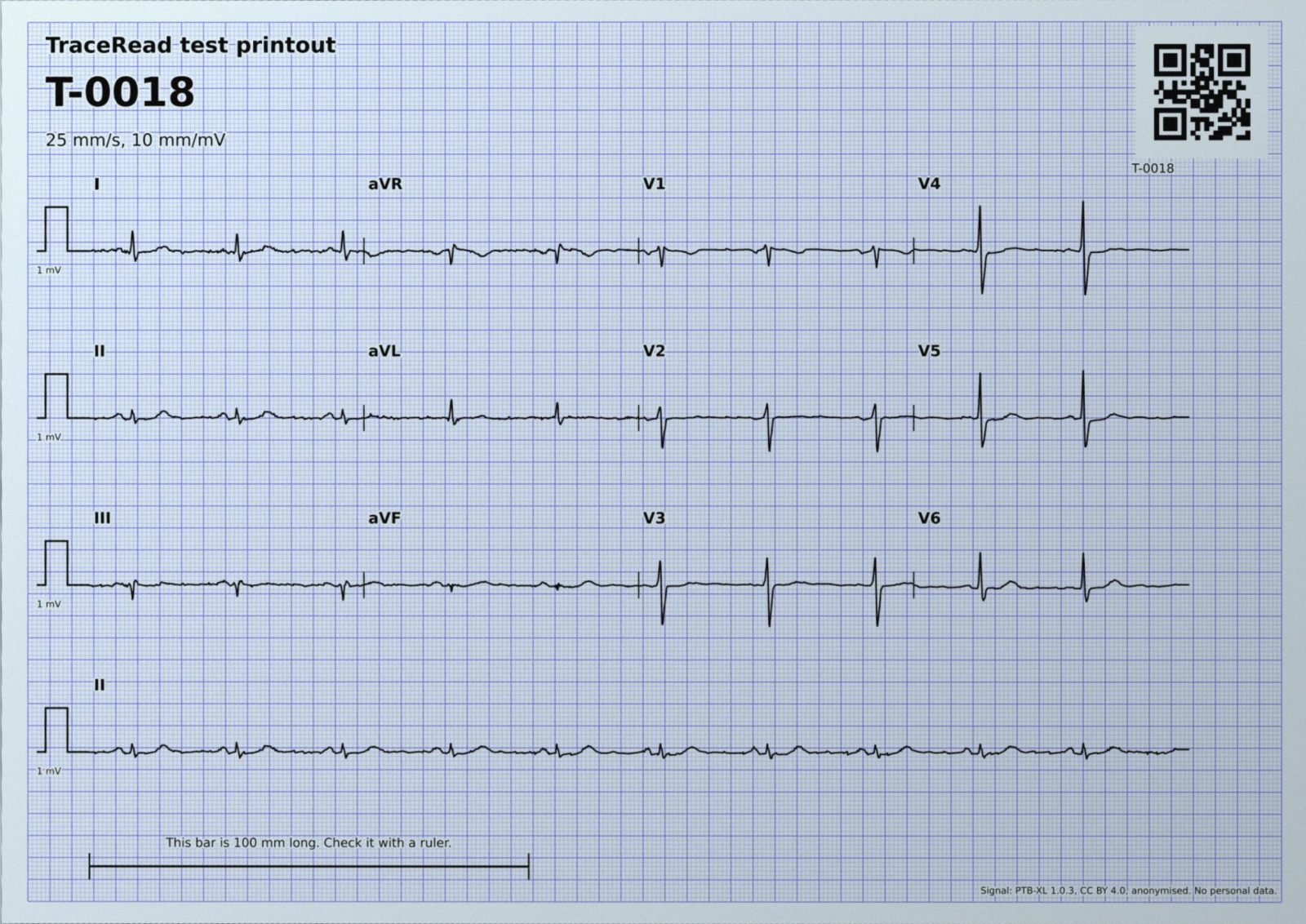
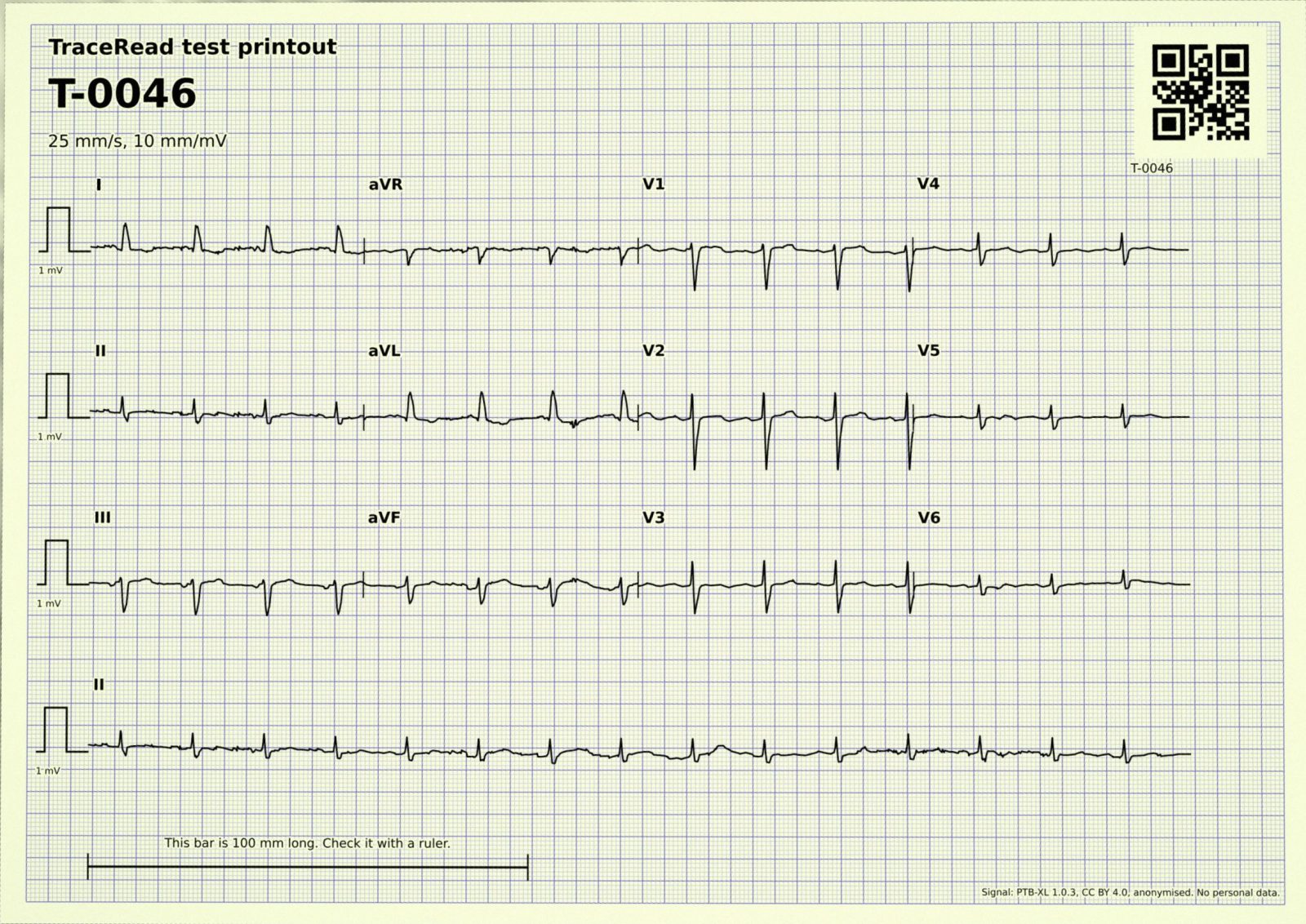
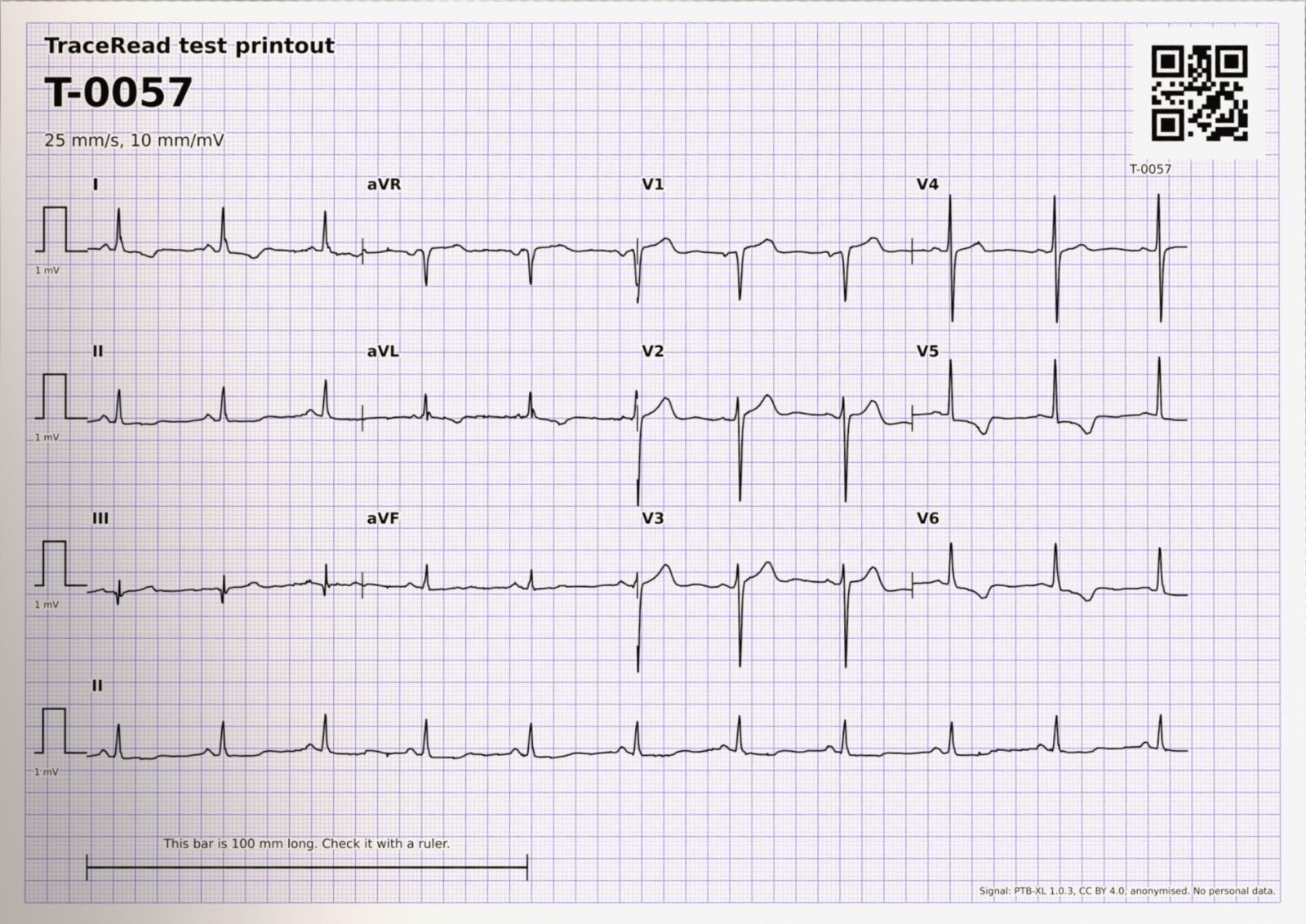
3 cases
Heart muscle damage and ST and T changes
The cardiologists recorded patterns of damage or changes late in the beat.
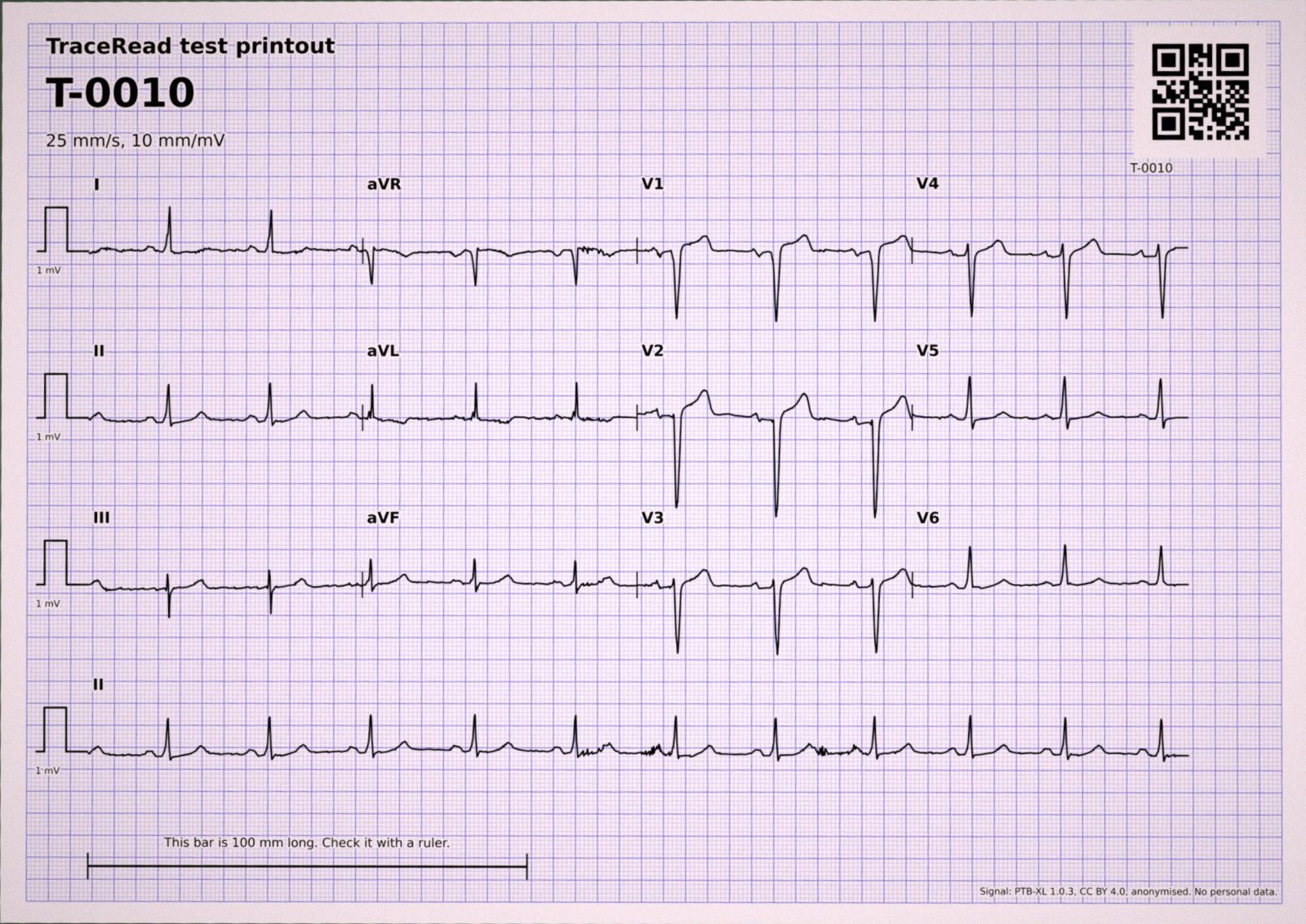
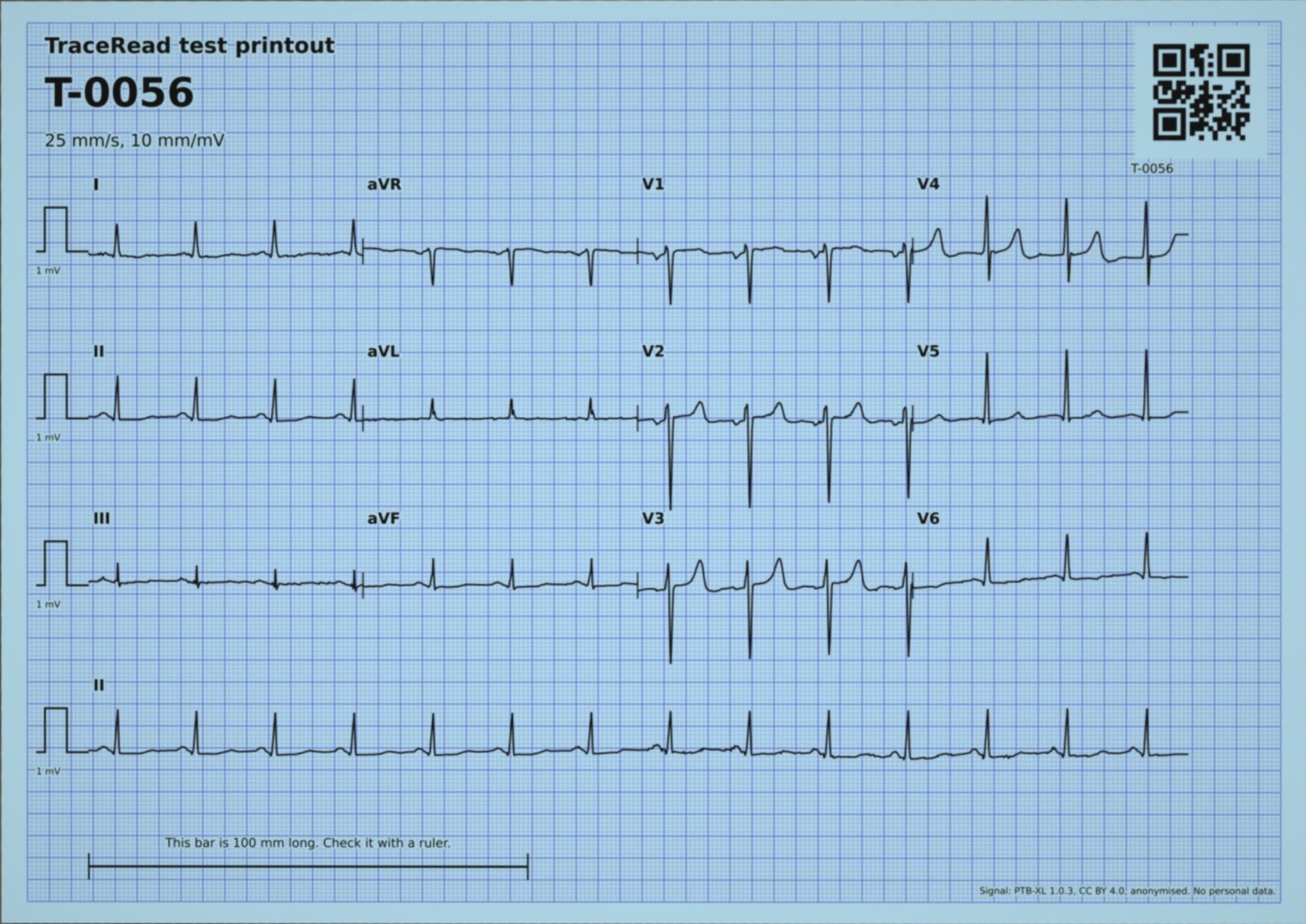
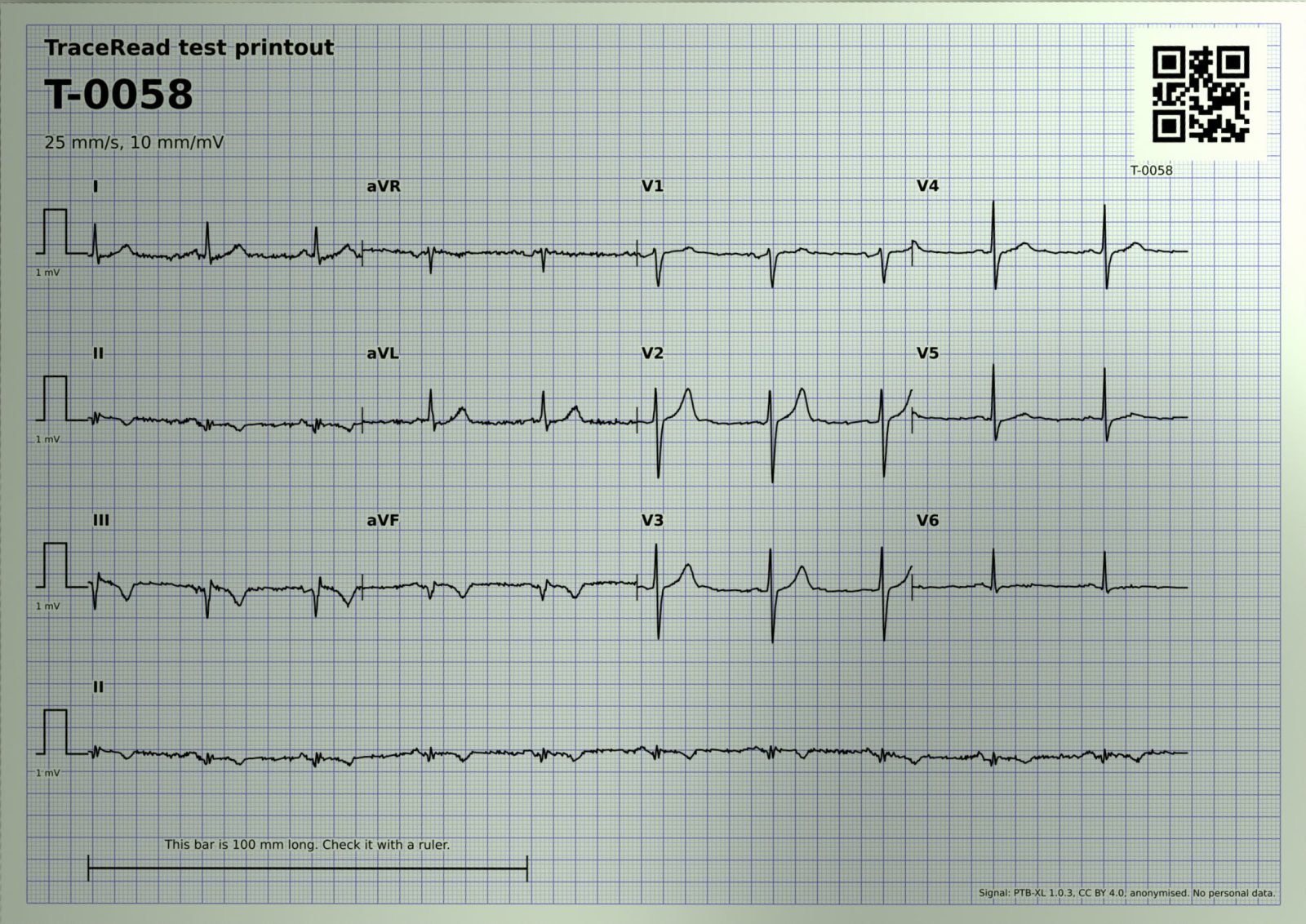
How the twelve pages were chosen
Pages T-0001 to T-0070 of the print kit whose PTB-XL age is 18 or over. They are split into four groups by the dataset's own statements, never by what TraceRead AI says: a rhythm statement other than sinus rhythm, a conduction or hypertrophy statement, normal ECG, and the rest. A seeded draw (seed 7) takes 3 pages from each group, so the 12 runs do not stand for the dataset as a whole. Each page is rendered at 200 dpi and turned into one photo made by computer with TraceRead's own photo simulator (photo mode, frame 2400 by 1800, seed 7). Every run is listed, held ones included.
From each of the three groups of pages (thickened muscle or conduction, normal, and rhythm), the home page shows the run where TraceRead AI agreed best with the dataset's cardiologists. The table lists all 12, including the ones it read wrongly.
A statement counts as found when TraceRead AI flagged the same PTB-XL statement. TraceRead AI flags a pattern when its score passes a line set in advance on other ECGs, so it often flags more than the cardiologists recorded; each extra flag is listed in its case.
See a case read live
We show you TraceRead reading public research ECGs, step by step, and talk through how your team prints, photographs and reads ECGs today.